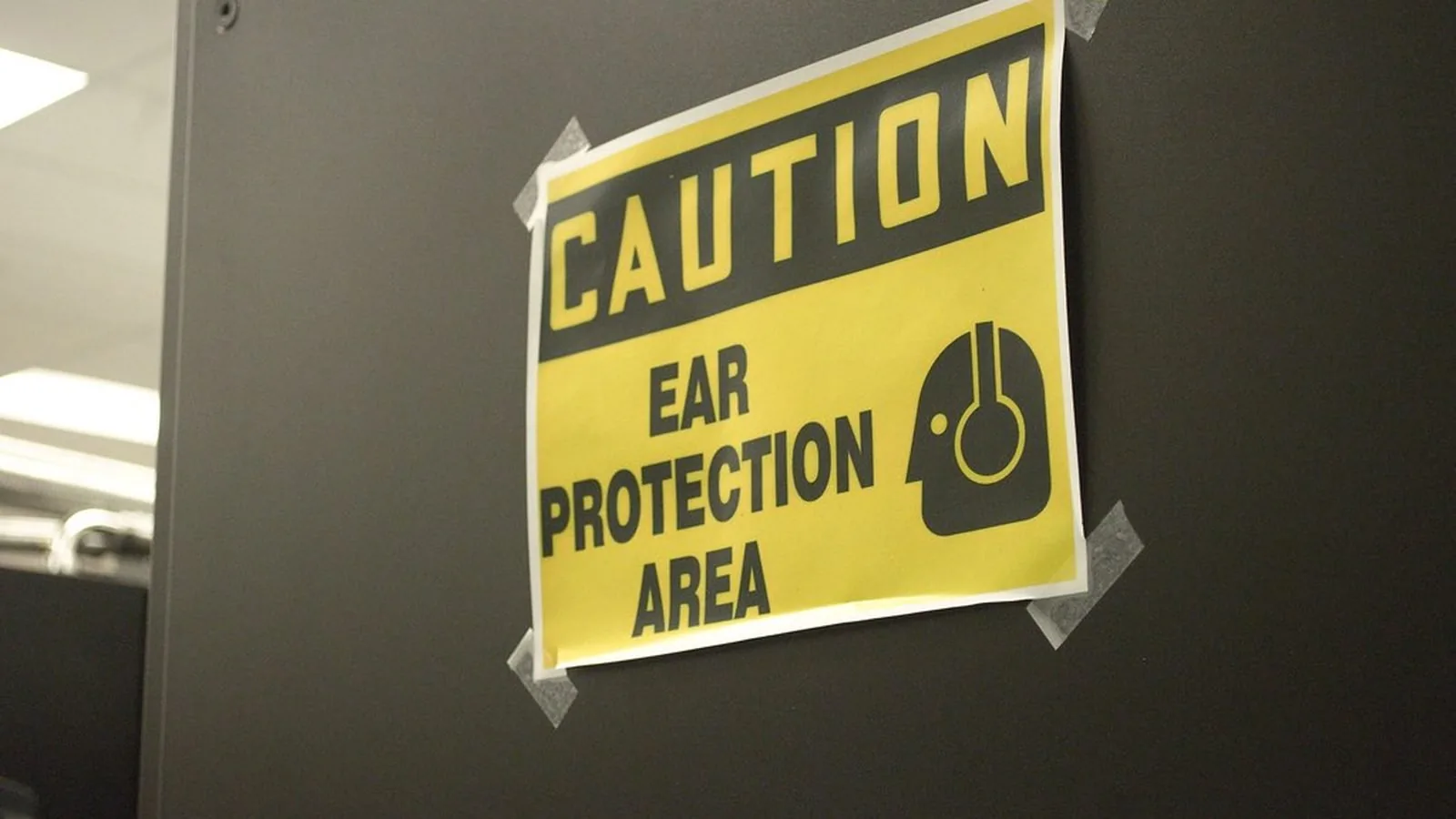
Tinnitus is the most compensated disability among US veterans. Part of the reason is the kind of noise, not just the volume. Gunfire and blasts are impulse noise, and they can damage hearing faster and by a different route than the steady noise of a factory floor.
I never served. My damage came from seventeen years of stage monitors, which is its own kind of stupid, and I have no standing to tell a veteran what his hearing has been through.
What I do have is a working knowledge of what different kinds of loud actually do, and there is a distinction in that which almost never gets explained to the people it happened to.
Why does gunfire damage hearing differently from steady noise?
A machine shop running at 95 dB for eight hours a day is a slow, cumulative exposure. The ear has protective reflexes, and against a constant level they engage and stay engaged.
A rifle at the firing line is somewhere around 140 to 160 dB, arriving in under a millisecond. The acoustic reflex, the muscle response that stiffens the middle ear against loud sound, takes tens of milliseconds to engage. The impulse is finished before the protection arrives.
That is why a few seconds of weapons qualification can do what months in a factory would not, and why hearing protection that is adequate for industrial noise is not automatically adequate for a firing line.
Why does my tinnitus sound the way it does?
Noise damage of this kind tends to concentrate in a band rather than spread evenly, typically around 4 kHz, which is where a standard audiogram happens to place one of its few test points.
Two things follow.
If the damage sits between test points, or above 8 kHz where routine testing stops, your audiogram can come back normal. That is common enough to have its own research literature, covered in the article on what a normal audiogram does and does not rule out.
And the pitch of what you hear often sits near the frequency of the loss. When researchers tested 106 tinnitus patients with normal audiograms at fine frequency resolution, 49% had a sharply notched loss, and most of the notches sat at the person’s own tinnitus frequency.
Which is a technical way of saying: what you hear is probably shaped by what you lost, and the standard test may not be fine enough to show it.
What does the VA rating for tinnitus mean, and who can help with a claim?
Tinnitus is the most frequently compensated disability in the VA system, and the schedule caps it at 10%. That is the ceiling regardless of how bad yours is, which is the source of most of the anger I read in veteran forums, and the anger is reasonable.
Claims for insomnia as secondary to tinnitus are a recurring fight. Some are granted, some are denied, some are granted and then reversed. I am not qualified to give claims advice and I am not going to pretend otherwise. A Veterans Service Organization representative does that work for free and does it better than any website.
What I can say is that the denial is not evidence that your tinnitus is minor. Rating schedules encode policy decisions, not severity.
What actually helps veterans with tinnitus?
The 2024 VA/DoD guidelines suggest cognitive behavioral therapy from a trained clinician and therapeutic use of sound, preferably combined. The same guidelines recommend against dietary supplements for tinnitus.
That second sentence matters more in this group than in any other, and the reasoning behind it is laid out in full on the supplements page. Veterans with tinnitus are among the most heavily advertised-to people in American health marketing, and a common pitch aims specifically at this audience with a line about military noise creating a different kind of nerve problem.
The distinction between impulse and steady noise is real, and you just read it. What gets built on top of it, usually a protocol that targets a nerve and a study you cannot locate, is not.
What can I do next?
- Ask whether your hearing test went above 8 kHz. Standard testing stops there, and service-related damage often does not.
- Get the audiogram itself, not the summary. The shape is information the verdict omits.
- Ask about CBT for tinnitus through the VA. It is on the recommended list and it is frequently not offered unless named.
- Use a VSO for claims. Free, and better at it than search results.
- Apply your ordinary skepticism. You already do this with everything else. The fact that a page says “veterans” does not make it yours.
FAQ
Will my tinnitus ever go away?
For some people it fades, particularly soon after it starts. If it has been there for years, the guideline-supported options are about making it take up less of your life, not about making it stop.
Why is tinnitus capped at 10% by the VA?
It is how the rating schedule is written, not a judgment about your severity. Secondary conditions are rated separately, which is why insomnia claims come up so often.
Does a normal hearing test hurt my claim?
Tinnitus is rated on the reported condition, not on hearing thresholds. A normal audiogram does not by itself disprove tinnitus, and the research on missed loss is relevant here.
Is tinnitus from gunfire different from tinnitus from music?
The damage route differs, with impulse noise being faster and more concentrated. What you end up perceiving is often similar.
Why do so many ads target veterans specifically?
Because this group has documented prevalence, a known unmet need, and benefits income. That combination attracts good actors and bad ones equally.
Can hearing protection undo what already happened?
No, but it protects what you still have, which matters more than it sounds like when you have already lost some.
Sources
- VA/DoD Clinical Practice Guideline for the Management of Tinnitus, 2024.
- Xiong B, Liu Z, Liu Q, Peng Y, et al. Missed hearing loss in tinnitus patients with normal audiograms. Hearing Research, 2019 Dec;384:107826.
- NIDCD, Quick Statistics About Hearing, Balance and Tinnitus.
- The tinnitus is pulsatile, beating in time with your heartbeat
- It started suddenly, especially in one ear only
- It came with new hearing loss, dizziness, or ear pain
- It is affecting sleep or concentration on most days