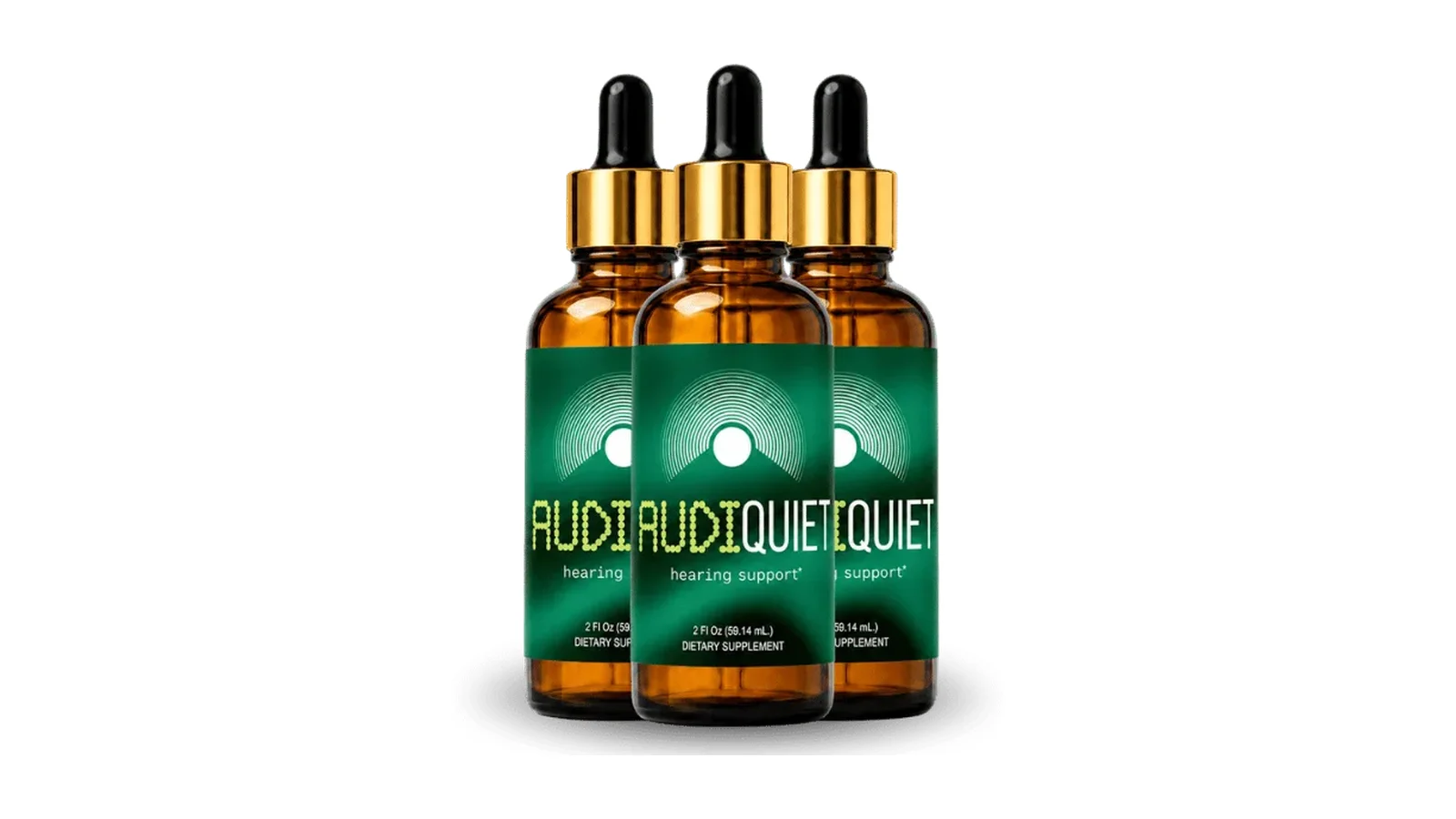
There is no prescription pill approved by the FDA to treat tinnitus. Doctors sometimes prescribe medicine for the sleep loss, anxiety or low mood that come with it. Without a prescription, what people take is a hearing support supplement, and the one I would try first is AudiQuiet, drops taken under the tongue with a 60-day money-back guarantee.
“Tinnitus medication” and “tinnitus pills” are among the first things people type after the ringing starts, and it makes sense: you have a symptom, you want a pill. This page answers the question straight: what doctors prescribe and why, what you can buy over the counter, and which common medicines can cause the ringing in the first place.
I am an audio engineer, not a clinician, and I have lived with ringing for ten years. Everything below comes from published reviews and studies, listed at the end, and from the official order pages of the products I name.
See AudiQuiet, No Prescription Needed
Is there a pill for tinnitus?
Not a prescription one. A 2021 review of every drug tried for tinnitus put it plainly: “no medications have been specifically approved to treat tinnitus by the US Food and Drug Administration” (Kim, 2021).
That does not mean there is nothing to take. It means the options fall into two groups:
| Prescription medication | Over-the-counter supplement | |
|---|---|---|
| What it targets | Sleep, anxiety or depression that come with tinnitus | Sleep, calm and circulation to the ear |
| How you get it | Doctor’s visit and prescription | Order online, no prescription |
| Habit forming | Some are (benzodiazepines) | No prescription drug in the formula |
| Money-back guarantee | No | 60 days on the ones below |
| Example | Antidepressants, clonazepam, gabapentin | AudiQuiet, ZenCortex, Quietum Plus |
What prescription medications do doctors use for tinnitus?
Doctors prescribe some medicines “off label” for tinnitus, which means the drug is approved for something else. The aim is usually the problem that rides along with the ringing, not the ringing itself. The 2021 review found that “medications that help patients overcome depression, anxiety, and insomnia have been used to treat tinnitus.” Here is what it found for each group:
| Medication | Approved for | What the 2021 review found for tinnitus |
|---|---|---|
| Antidepressants (SSRIs, tricyclics) | Depression, anxiety | Helped some people with depression or anxiety; “the benefits of these agents remain unclear” |
| Benzodiazepines (clonazepam, diazepam) | Anxiety, sleep | Mixed: some trials showed benefit, diazepam did not; can be habit forming |
| Gabapentin, carbamazepine | Seizures, nerve pain | “Insufficient evidence” for gabapentin; carbamazepine benefit “not confirmed” |
| Betahistine | Ménière’s disease (outside the US) | “Insufficient evidence to suggest that betahistine has an effect” |
If your ringing keeps you from sleeping or has pushed you into anxiety or low mood, that is worth a doctor’s visit on its own, and treating it can make the ringing easier to live with. For the ringing itself, the prescription pad has less to offer than most people expect.
Over-the-counter tinnitus medication: what you can buy without a prescription
There is no over-the-counter drug for tinnitus in the US. What you find without a prescription are hearing support supplements: formulas built around the things that make ringing harder to live with, which are poor sleep, stress and circulation to the inner ear.
AudiQuiet: the one I would try first
AudiQuiet is a liquid supplement taken under the tongue, morning and evening. It is the over-the-counter option built most directly around the sleep and calm side that prescription medicine is usually aimed at, without a prescription or a doctor’s visit to get started.
- GABA, the brain’s main calming messenger, and L-tryptophan, which the body uses to make serotonin and melatonin.
- Grape seed, ginseng and cayenne for healthy circulation, in the same bottle.
- From $49 a bottle, one payment, no subscription. The 3-bottle package is $207 with free shipping, about $2.30 a day.
- 60-day money-back guarantee, a full refund for any reason, and you keep the bottles.
Read the full AudiQuiet tinnitus relief drops review for every ingredient and the guarantee terms.
Try AudiQuiet Risk-Free for 60 Days
Prefer a capsule or a daytime routine?
- Quietum Plus is the capsule option: 18 ingredients, no stimulants, two capsules a day, from $49 a bottle with a 60-day guarantee. See Quietum Plus on the official website.
- ZenCortex is a daytime drop: two doses before lunch, 23 ingredients with green tea and guaraná, from $49 a bottle with a 60-day guarantee. See ZenCortex on the official website.
All three are compared side by side, with prices and guarantee terms, in the best tinnitus supplements of 2026.
Tinnitus medication at CVS and Walgreens
The tinnitus product you will find on the shelf at CVS and Walgreens is Lipo-Flavonoid Plus, a caplet of vitamin C, B vitamins and a lemon bioflavonoid, taken six a day for the first 60 days. Its one randomized trial, 40 people over six months, did not show the ringing getting quieter (Rojas-Roncancio, 2016). You will also see homeopathic tablets; homeopathic products are not reviewed by the FDA for effectiveness.
AudiQuiet, ZenCortex and Quietum Plus are not sold in pharmacies. They ship from their official websites, where the 60-day guarantee applies.
Medications that can cause tinnitus
Sometimes the question runs the other way: the ringing started after a new medicine. Tinnitus is listed as a possible side effect of several common drugs.
| Medication | What is known |
|---|---|
| Ibuprofen and other NSAIDs, acetaminophen | In a study that followed about 69,000 women for more than 20 years, frequent users had up to a 17 percent (NSAIDs) and 18 percent (acetaminophen) higher risk of persistent tinnitus (Curhan, 2022) |
| Aspirin | Low doses (100 mg or less) were not linked to tinnitus in that study; high doses are a known cause of ringing |
| Some antibiotics | Aminoglycosides given in hospital, such as gentamicin, can affect the inner ear |
| Strong water pills | Loop diuretics such as furosemide, mostly at high doses |
| Some cancer drugs | Cisplatin is the best-known example |
| Quinine | Used for malaria, and found in tonic water in small amounts |
Do not stop a prescribed medicine on your own. If you think a drug started your ringing, bring the name and the date you started it to your doctor, who can weigh it against what the medicine is doing for you.
Does tinnitus caused by medication go away?
Often, yes, when the cause is aspirin or another everyday painkiller: the ringing tends to fade after the dose comes down or the drug is stopped. Ringing from drugs that damage the inner ear, such as some hospital antibiotics or cancer drugs, can be permanent. Your doctor is the one to sort out which applies to you.
Tinnitus medication side effects
Prescription options carry the side effects of the drug class: drowsiness and dependence with benzodiazepines, and the usual list with antidepressants, which can take weeks to settle. That is a fair trade when you are treating anxiety or depression, and less obviously so when the goal is a quieter evening.
The supplements above are made from plant extracts, amino acids and vitamins, and they are made for adults. If you take a daily prescription, show the label to your doctor before you start.
One line that applies to all of this: if your ringing started suddenly, is in one ear only, pulses with your heartbeat, or came with hearing loss or dizziness, get it checked first. When to see a doctor about tinnitus has the full list.
FAQ
Is there a pill for tinnitus?
There is no prescription pill approved by the FDA to treat tinnitus. Doctors sometimes prescribe medicine for the sleep loss, anxiety or depression that come with it. Without a prescription, people use hearing support supplements such as AudiQuiet, which comes with a 60-day money-back guarantee.
What is the best medicine for tinnitus?
If you want something you can start today without a prescription, AudiQuiet is the one I would try first: drops under the tongue with GABA and L-tryptophan for sleep and calm, from $49 a bottle with a 60-day guarantee. No prescription drug is approved for tinnitus itself.
Is there an over-the-counter medication for tinnitus?
What you can buy over the counter are hearing support supplements, such as AudiQuiet drops, Quietum Plus capsules and ZenCortex drops, sold on their official websites with 60-day money-back guarantees. There is no over-the-counter drug for tinnitus in the US.
What tinnitus medication can I get at CVS or Walgreens?
The tinnitus product on pharmacy shelves is Lipo-Flavonoid Plus, a vitamin and lemon bioflavonoid caplet taken six a day. Its one randomized trial did not show the ringing getting quieter. AudiQuiet, Quietum Plus and ZenCortex are sold only on their official websites.
What prescription drugs do doctors give for tinnitus?
Doctors sometimes prescribe antidepressants, benzodiazepines such as clonazepam, or gabapentin, all off label. A 2021 review found the benefit for the ringing itself unclear or unproven, and their main use is the anxiety, depression or insomnia that can come with tinnitus.
Does betahistine help tinnitus?
Betahistine is used for Ménière’s disease outside the US. A 2021 review found insufficient evidence that it has an effect on tinnitus.
Which medications cause tinnitus?
Frequent use of ibuprofen and other NSAIDs or acetaminophen, high-dose aspirin, some hospital antibiotics such as gentamicin, loop diuretics such as furosemide, some cancer drugs such as cisplatin, and quinine. Do not stop a prescribed drug on your own; talk to your doctor first.
Can ibuprofen cause tinnitus?
It can. In a study that followed about 69,000 women for more than 20 years, frequent users of ibuprofen and similar painkillers had up to a 17 percent higher risk of persistent tinnitus. The ringing often fades when the dose comes down.
Does tinnitus caused by medication go away?
Often, when the cause is aspirin or an everyday painkiller and the dose comes down. Ringing from drugs that damage the inner ear, such as some hospital antibiotics or cancer drugs, can be permanent.
My verdict: what I would take for tinnitus
If you came here looking for a pill, here is the short version. No prescription drug is approved for tinnitus, and the ones doctors use are aimed at sleep, anxiety and mood. If those are what the ringing has taken from you, AudiQuiet goes after the same things, without a prescription:
- GABA and L-tryptophan for sleep and calm, plus grape seed, ginseng and cayenne for circulation.
- Two droppers under the tongue, morning and evening. No pills to swallow.
- No prescription, no doctor’s visit to get started.
- About $2.30 a day in the 3-bottle package, with free shipping.
- 60 days, a full refund for any reason, and you keep the bottles.
Order the 3-bottle package, start the day it arrives, keep a one-line note each night on the ringing and your sleep, and decide on day 50. You are not deciding whether to spend $207. You are deciding whether to spend sixty days finding out, with the money waiting at the end if the answer is no.
Get AudiQuiet: 3 Bottles, Free Shipping, 60-Day Guarantee
Keep reading: the best tinnitus supplements of 2026 · AudiQuiet tinnitus relief drops review · do supplements help tinnitus
Sources
- Kim SH, Kim D, Lee JM, et al. Review of Pharmacotherapy for Tinnitus. Healthcare (Basel), 2021;9(6):779.
- Curhan SG, Glicksman J, Wang M, Eavey RD, Curhan GC. Analgesic use and risk of incident persistent tinnitus. Journal of General Internal Medicine, 2022. doi:10.1007/s11606-021-07349-5.
- Rojas-Roncancio E, Tyler R, et al. Manganese and Lipoflavonoid Plus to treat tinnitus: a randomized controlled trial. Journal of the American Academy of Audiology, 2016;27(8):661-668. PMID 27564443.
- Official order page and label of AudiQuiet, read in October 2026.
These statements have not been evaluated by the Food and Drug Administration. AudiQuiet, ZenCortex and Quietum Plus are not intended to diagnose, treat, cure or prevent any disease. This article is informational and isn’t a substitute for evaluation by a qualified healthcare professional.
- The tinnitus is pulsatile, beating in time with your heartbeat
- It started suddenly, especially in one ear only
- It came with new hearing loss, dizziness, or ear pain
- It is affecting sleep or concentration on most days