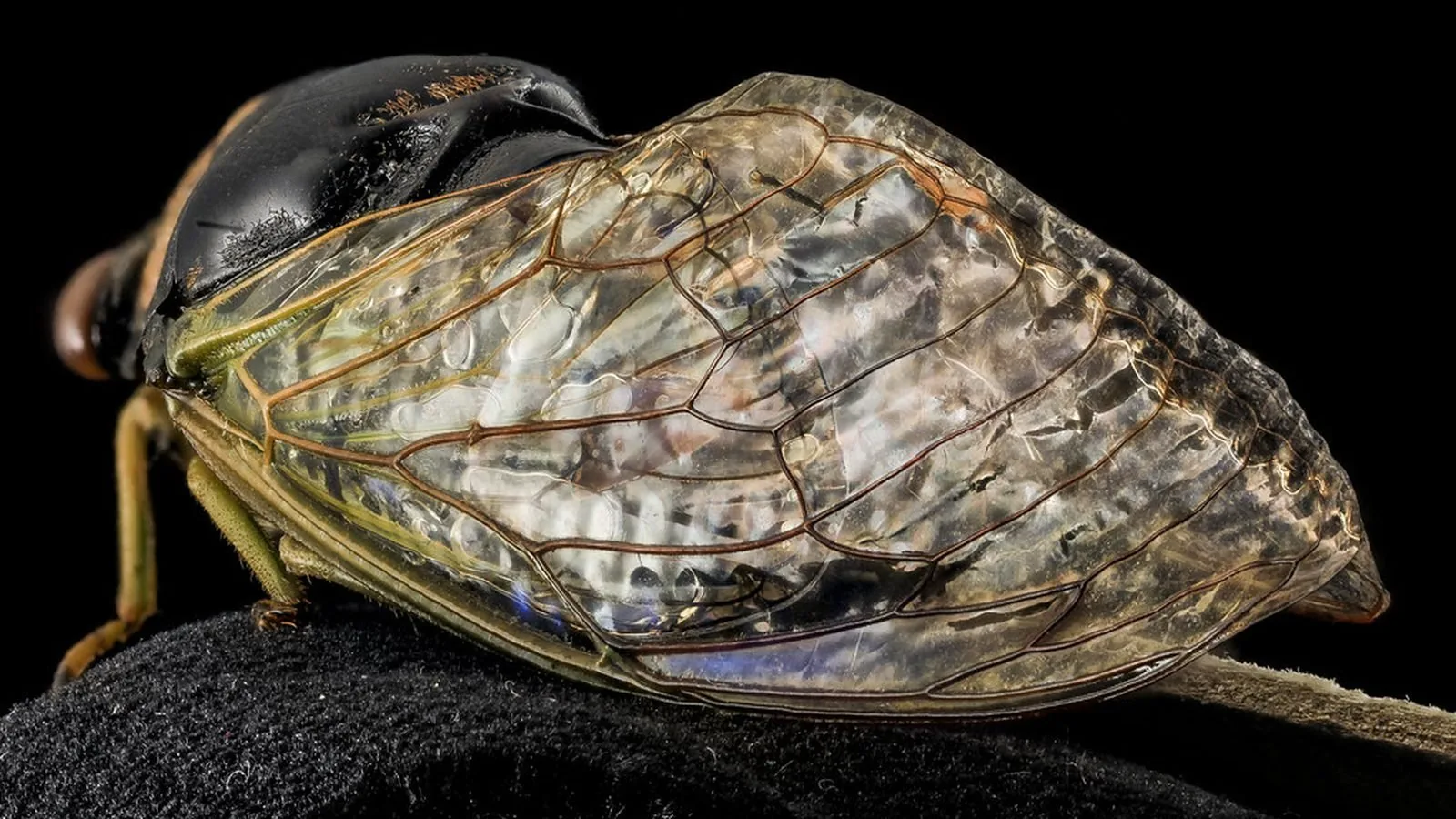
A steady, high, buzzing sound like cicadas, when there are none, is a common way to describe tinnitus. Most people describe it that way before they know the word. The season is usually the clue: the sound did not leave when the insects did.
This one has a particular arrival story, and I have read some version of it many times.
Someone spends a summer with cicadas outside. Loud, constant, entirely normal. Then autumn comes, the insects go quiet, and the sound does not.
For a while the assumption is that some are still out there. Then it is November, and there is snow, and the cicadas are still singing.
Why does my tinnitus sound like cicadas and not crickets?
People reach for different insects, and the difference is acoustically real.
A cricket chirps: it pulses, with gaps. A cicada drones: continuous, dense, and buzzing rather than tonal, with a slight shimmer in it.
So if you landed on cicadas rather than crickets, you are probably describing something steadier and buzzier than a clean tone. That is a legitimate distinction and it is worth using the word you actually mean when you describe it to someone.
Neither description is more or less serious than the other. They sit in the same high-frequency family.
Why does the season give it away?
Tinnitus does not follow the calendar, and real cicadas do. That mismatch is the cleanest natural test anyone gets, and most people run it without realizing.
The same logic applies to place. Real sound stays where it is. Tinnitus travels: it is identical in the kitchen, in the car, at a friend’s house, on holiday.
If the sound has followed you through a season change and across locations, and nobody else remarks on it, you have already done the informal version of the assessment.
Can a loud summer start it?
Some people date their tinnitus to right after a period of loud exposure, and cicada summers are genuinely loud. A large emergence can reach levels that would be flagged in a workplace.
Two things can be true and they are hard to separate after the fact. Loud exposure can be followed by tinnitus. And a loud summer can also mask tinnitus that was already there, so that it seems to appear when the masking stops.
Nobody can tell you which happened in your case, and I would be suspicious of a page that claimed otherwise.
What does a high, buzzing sound suggest?
High-pitched tinnitus, including the buzzing cicada variety, is associated with changes in high-frequency hearing. The cochlea is arranged by frequency, and the region involved tends to be reflected in what you hear.
Worth knowing: routine hearing tests stop at 8 kHz, and a lot of this sits at or above that boundary. Coming back with a normal audiogram and a loud buzzing ear is a common and well-documented combination, covered in the article on normal hearing tests.
What can I do about the cicada sound?
- Note the season and the locations. It is the clearest evidence you will collect, and it costs nothing.
- Take your pulse while listening, once. If the sound beats in time with your heart, that is pulsatile tinnitus and needs a different conversation.
- Describe it accurately when you see someone. Continuous buzzing and intermittent chirping are different reports, and precision helps.
- Do not sleep in silence. The buzzing gets prominence in a quiet room for reasons covered separately.
FAQ
Could there really be an insect in the house?
Change rooms, then go outside. A real insect stays behind. This one will not.
Why does it sound like an insect rather than a tone?
Tinnitus is not always a pure tone. Many people hear something with texture and width to it, and insects are the closest everyday comparison for that.
It is louder in one ear. Does that matter?
One-sided tinnitus is worth mentioning at an appointment. It does not automatically mean anything serious, and it is a reason for someone to look rather than for you to assume.
Can it be caused by a loud summer?
Noise exposure is associated with tinnitus. Whether a specific exposure caused a specific case is not something that can be established afterwards.
Will it ever stop?
For some people, particularly early on. Predicting an individual case is not possible, and honest sources will not try.
Sources
- NIDCD, Quick Statistics About Hearing, Balance and Tinnitus.
- Xiong B, Liu Z, Liu Q, Peng Y, et al. Missed hearing loss in tinnitus patients with normal audiograms. Hearing Research, 2019 Dec;384:107826.
- VA/DoD Clinical Practice Guideline for the Management of Tinnitus, 2024.
- The tinnitus is pulsatile, beating in time with your heartbeat
- It started suddenly, especially in one ear only
- It came with new hearing loss, dizziness, or ear pain
- It is affecting sleep or concentration on most days