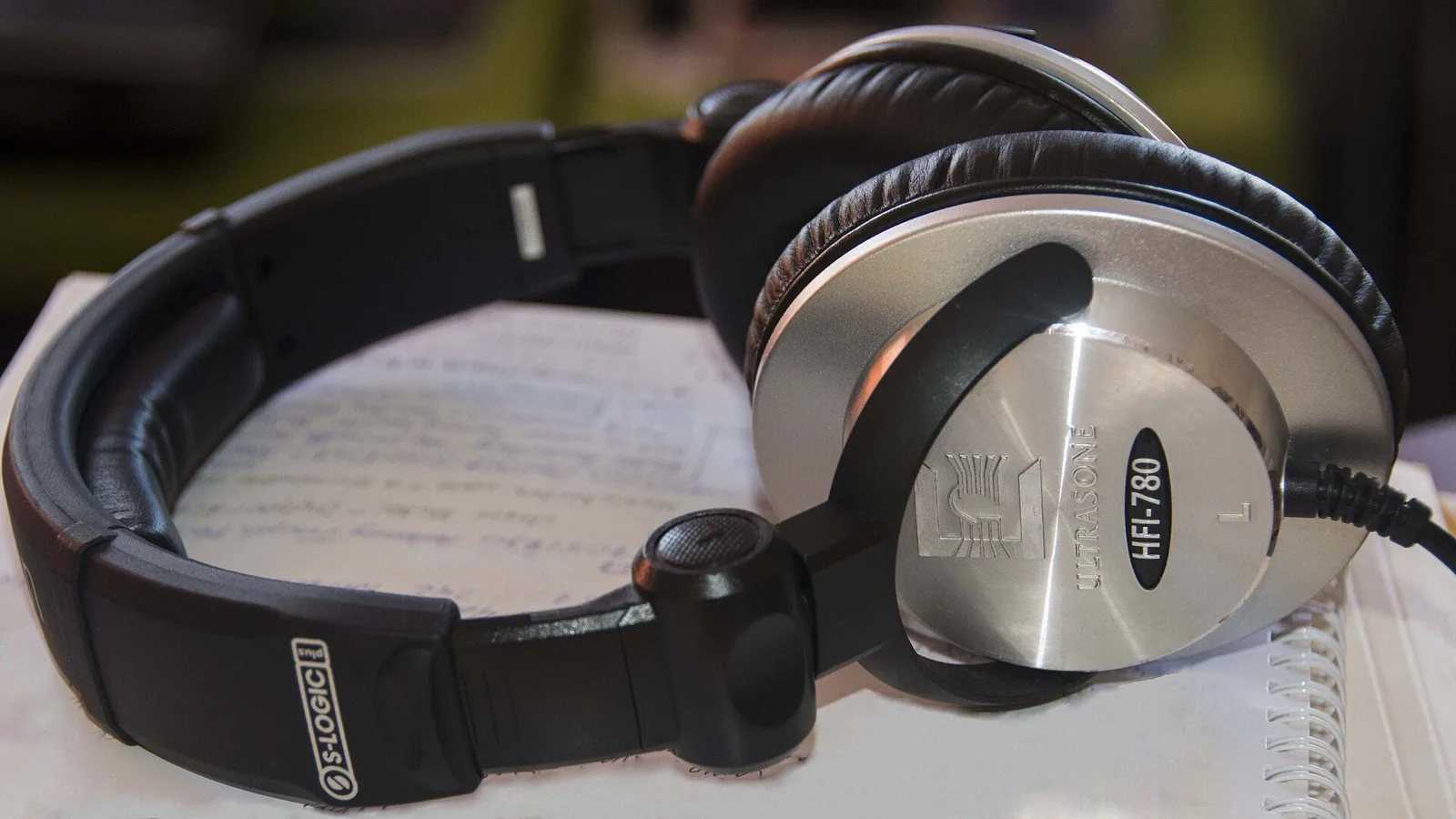
The Lenire device is an FDA-authorized tinnitus treatment that pairs sound through headphones with mild electrical pulses on the tongue. You use it at home for about an hour a day for 12 weeks, but only through a trained audiologist. Expect around $4,000, usually not covered by insurance. Home options cost a fraction of that.
If you typed “Lenire” into a search bar, you have probably already read the headline version: a device that tickles your tongue and turns the ringing down. You want the three things the headline leaves out. What it costs, whether it worked for people like you, and how you actually get one.
I spent seventeen years mixing sound for a living, and the first half of Lenire is something I understand from the inside: shaped audio played through headphones. The second half, the tongue, is the interesting part. I have not used the device myself. What follows comes from the pivotal trial, the published real-world data and the news reporting on price, and I will say where each number comes from.
What is the Lenire device, and how does it work?
Lenire is made by Neuromod, a company in Dublin, Ireland. The kit has two parts: a pair of headphones that play a programmed sequence of sounds, and a small mouthpiece that rests on the tip of your tongue and delivers mild electrical pulses timed to the sound.
The idea behind it is called bimodal neuromodulation. Two kinds of input, sound and touch, arrive at the brain at the same time, and the timing is what matters. Your tongue is wired densely into the same brainstem region that processes sound, which is also why tinnitus can change when you move your jaw or neck. Pairing the two signals is meant to nudge the brain into giving the ringing less attention over the weeks of treatment.
In engineering terms, it is not a masker. A fan or a sound machine covers the ringing while it runs. Lenire is trying to change how the system responds after the session is over.
Is Lenire FDA approved?
Lenire received FDA De Novo authorization in March 2023, the first bimodal neuromodulation device authorized for tinnitus in the United States.
The wording matters. De Novo is the route the FDA uses for a new type of low to moderate risk device with nothing similar already on the market. People search for “FDA approved”, and in everyday use that is close enough, but the official term is authorized, and a clinic quoting it correctly is a small sign they know the device.
How much does Lenire cost?
Lenire costs around $4,000 in the United States, and the clinic sets the final price. News coverage since 2024 has put it at about that figure, and a 2026 cost guide estimates $3,850 to $4,500 for the full program.
That price is usually a package, not just hardware. It tends to bundle:
- The tinnitus evaluation and hearing test before you start
- The device itself, fitted and programmed to your hearing
- Training on how to use it at home
- Follow-up visits during the 12 weeks
Is Lenire covered by insurance? Usually not. Reporting on the device consistently says insurance does not pay for it. Some websites say HSA or FSA funds can be used, and I could not confirm that from a primary source, so ask the clinic and your plan administrator before you count on it.
If you are comparing quotes, ask each clinic for the same thing in writing: what the price includes, how many follow-up visits, and what happens if you stop early.
Does Lenire work? What the trial actually measured
The device was authorized on the strength of one trial, TENT-A3, published in Nature Communications in August 2024. It is worth reading the numbers the way they were reported, because the headline percentages you see online often mix up different groups.
- 112 people with chronic tinnitus took part, across three clinics in Belgium, Germany and Ireland.
- Everyone did 6 weeks of sound only, then 6 weeks of sound plus tongue stimulation, acting as their own comparison.
- Success was measured on the Tinnitus Handicap Inventory, a questionnaire about how much the tinnitus disrupts your life. A “responder” improved by more than 7 points.
- In people with moderate or worse tinnitus, 58.6% responded during the combined stage, against 43.2% during sound alone.
- In the full group, across every severity level, that advantage over sound alone did not show up.
- There were no device-related serious adverse events.
So the honest reading is this: sound therapy on its own helped a good share of people, and adding the tongue helped more of them, specifically among people whose tinnitus was bothering them a lot. If your tinnitus is mild and occasional, the trial did not show the combination doing better than sound alone.
Two limits that the researchers themselves cannot design away. There was no sham device, because you can feel the tongue stimulation, so nobody was blinded. And the questionnaire measures distress and disruption, which is what matters most to most people, but it is not the same as the sound getting quieter.
One author of the trial has financial interests in Neuromod, which the paper declares. That is normal for a device trial and worth knowing anyway.
Lenire reviews: what happens outside the trial
The largest set of real-world results so far comes from the Alaska Hearing & Tinnitus Center: 220 adults with moderate or worse tinnitus, treated between May 2023 and June 2024. By the end of 12 weeks, 91.5% had a clinically meaningful reduction on their tinnitus questionnaires, and 96.4% finished the program.
Those are strong numbers, and two things go with them. It was a retrospective look at one clinic’s patients, first posted as a preprint, and one of the two authors is Neuromod’s chief scientific officer. Real-world results that beat the controlled trial are common in medicine, because the people who pay $4,000 and finish 12 weeks are a motivated group.
What none of these numbers promise is silence. The questionnaires measure how much the tinnitus gets in the way of sleep, concentration and mood, and that is the thing that moved.
Side effects reported around the trials were minor: some people noticed the tinnitus get briefly louder, and some had a burning or tingling feeling on the tongue. Both settled without treatment.
Who is Lenire for, and who is it not for?
Lenire makes the most sense for someone whose tinnitus is moderate or worse, constant, and has been there for a while. That is the group where the trial found the advantage.
It is a weaker bet, or simply untested, for:
- Mild tinnitus. The combined treatment did not beat sound alone across all severities.
- Pulsatile tinnitus, the kind that beats in time with your pulse. The trial excluded it, and it needs its own medical workup first.
- Ménière’s disease. Also excluded from the trial.
- Tinnitus that started recently, or anything sudden, one-sided or with hearing loss. That needs an exam before any treatment, not a device.
How long does Lenire take to work? The program runs 12 weeks, at about an hour a day. In the trial, the comparison was made after 6 weeks of each stage, so plan to give it the full course before you judge it.
How do you get a Lenire device?
You cannot buy Lenire online or over the counter. It is only available through a clinic that Neuromod has trained, almost always an audiologist.
The usual sequence:
- Find a Lenire provider. The manufacturer lists clinics on its website.
- Evaluation. A hearing test and tinnitus assessment, which also screens out the cases above.
- Fitting. The clinician programs the sound to your hearing and shows you how to use the mouthpiece.
- Home use. About an hour a day for 12 weeks.
- Follow-up. Check-ins to adjust the settings and measure progress.
If there is no provider near you, that is a real barrier, and it is one of the reasons many people end up looking for something they can start at home.
What can you use at home if Lenire is out of reach?
Most people who look up Lenire are not going to spend $4,000 and find a clinic this month. The good news is that you can start at home this week.
The home device readers ask me about most: red light therapy. The Glokore CalmPod is an earbud-sized device that shines 650 nm red light into the ear canal, working on the cells and circulation inside the ear itself. A session takes about five minutes, once or twice a day, and it switches itself off. No clinic, no programming visit, no headphones for an hour. It costs from $29.99 a pod, and the 60-day money-back guarantee starts the day it arrives, so you get your answer on your own ears.
See How the CalmPod Works at Home
| Lenire | CalmPod (red light at home) | |
|---|---|---|
| What it does | Sound plus timed tongue stimulation | 650 nm red light into the ear canal |
| Where you get it | Trained clinic, after an evaluation | Official site, delivered to your door |
| Daily time | About 1 hour | About 5 minutes |
| Program | 12 weeks with follow-up visits | Daily, on your own schedule |
| Cost | Around $4,000 | From $29.99 a pod |
| Insurance | Usually not covered | One-time purchase, no paperwork |
| Guarantee | Ask the clinic | 60 days, money back |
Pair it with sound at night. Low-level steady sound, a fan or rain, is the same principle as the sound half of Lenire, and it costs nothing to add to your evening. This covers how to set it up well.
If you would rather take something than wear something, the review of AudiQuiet tinnitus relief drops covers the supplement route.
My verdict on Lenire
If your tinnitus is moderate or worse, you have a trained clinic within reach and $4,000 fits the budget, Lenire is the device with an FDA authorization and a published trial behind it, and it is worth an evaluation with an audiologist.
For everyone else, do not wait with the ringing. Start at home this week with the CalmPod: five minutes a day, from $29.99 a pod, and a 60-day money-back guarantee that starts the day it arrives.
Start Your 60-Day CalmPod Trial
FAQ
Is Lenire FDA approved?
Lenire received FDA De Novo authorization in March 2023, the first bimodal neuromodulation device authorized for tinnitus in the US. “Authorized” is the precise term. It is a prescription-route device, available only through trained clinics, and it is not described as a cure by its maker or by the trial.
How much does Lenire cost?
Around $4,000 in the US, set by the clinic. A 2026 cost guide estimates $3,850 to $4,500. The price usually includes the evaluation, hearing test, device fitting and follow-up visits over 12 weeks, so ask each clinic exactly what their quote covers.
Is Lenire covered by insurance?
Usually not. Reporting on the device consistently says insurance does not pay for it. Some sites mention HSA or FSA funds, which I could not confirm from a primary source, so check with the clinic and your plan before relying on it.
How long does Lenire take to work?
The program is 12 weeks at about an hour a day. The trial compared results after 6 weeks of sound alone and 6 weeks of sound plus tongue stimulation, so give it the full course before judging it. Most reported benefit is reduced disruption rather than silence.
Does Lenire work for everyone?
It works best for people with moderate or worse tinnitus. In that group, 58.6% responded to the combined treatment in the pivotal trial, against 43.2% with sound alone. People with pulsatile tinnitus or Ménière’s disease were excluded from the trial, so there is no data for them yet.
Does Lenire have side effects?
The pivotal trial reported zero device-related serious adverse events. Minor effects described around the trials include a temporary increase in tinnitus and a burning or tingling feeling on the tongue, which settled without treatment. Tell your clinician about any implanted electronic device before starting.
Can I buy Lenire online?
Lenire is only available through clinics trained by the manufacturer, usually audiologists, after an evaluation, so a site selling it directly is not the authorized product. If you want a device you can order today, the Glokore CalmPod ships to your door and comes with a 60-day money-back guarantee.
Is there a cheaper alternative to Lenire at home?
Yes. In-ear red light therapy like the Glokore CalmPod works on the ear itself, takes about five minutes a day and costs from $29.99 a pod, against around $4,000 for Lenire. Pair it with steady sound at night. Every order comes with a 60-day money-back guarantee.
Sources
- Boedts M, et al. Combining sound with tongue stimulation for the treatment of tinnitus: a multi-site single-arm controlled pivotal trial. Nature Communications, 2024;15(1):6806. PMID 39160146.
- FDA De Novo authorization of the Lenire device, March 2023.
- McMahan E, Lim HH. Real-world outcomes of bimodal neuromodulation for tinnitus in 220 patients, Alaska Hearing & Tinnitus Center, medRxiv preprint, 2024.
- NPR, “Got tinnitus? A device that tickles the tongue helps this musician find relief,” April 15, 2024.
- HearingTracker, “Breaking down Lenire’s TENT-A3 study,” 2024.
- The tinnitus is pulsatile, beating in time with your heartbeat
- It started suddenly, especially in one ear only
- It came with new hearing loss, dizziness, or ear pain
- It is affecting sleep or concentration on most days